
Executive Summary
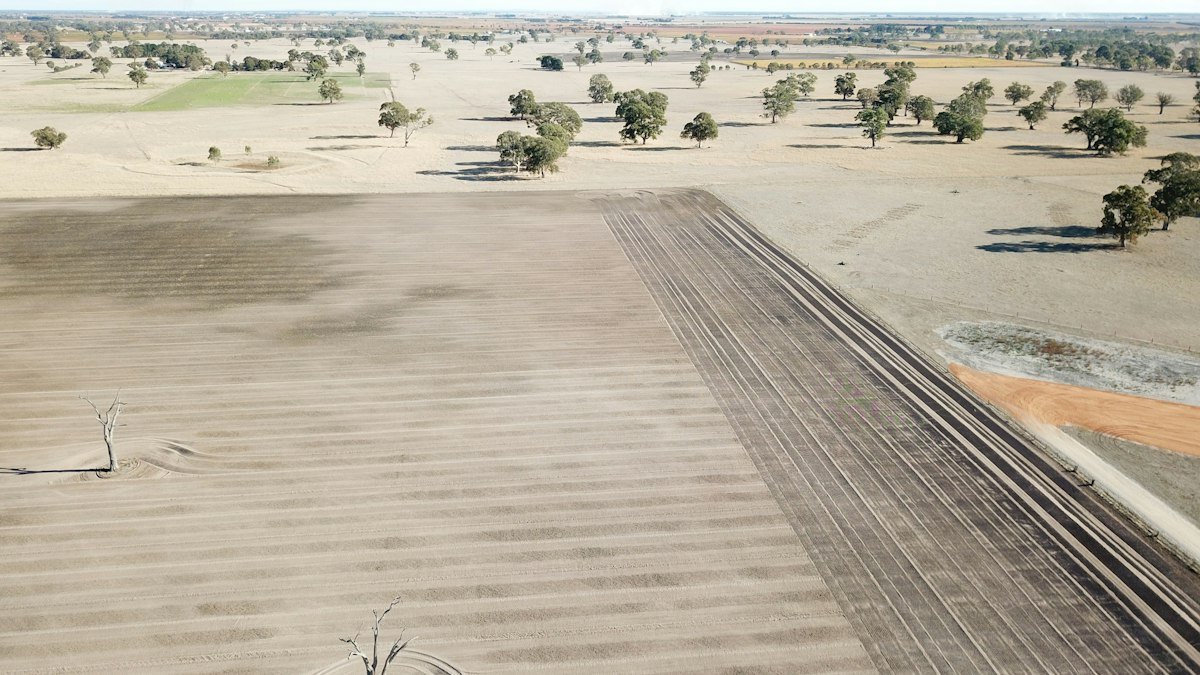
Anthropic signed its first Australian data centre lease, taking capacity at the planned Western Downs Digital Park roughly 250 km west of Brisbane. The campus is planned at 2.16 GW across four 360 MW halls, reported at A$32 billion, and is due to start operating in 2027, according to iTnews.
The number is large for Australia and ordinary for the AI industry. What is not ordinary is the workload. This capacity is described as being for Claude inference rather than model training, which makes it one of the first announced gigawatt-scale sites built around serving models rather than building them.
The lease was reported on 16 September by Reuters, iTnews and the Brisbane Times. The developer is Zerra DC, a Singapore-based firm working through project company WDDP, alongside Macquarie Capital and the Dexus-controlled Australian Data Centres. It is expected to become the largest data centre campus in the country.
Australia is the interesting part, not the megawatts
In one sense this is unremarkable. AI companies have signed power agreements far larger than 2.16 GW this year alone, and our power commitments record counts more than 80 GW of announced capacity across 25 deals.
In another sense the location is the entire story. Almost every gigawatt-scale commitment so far has landed in the United States. Australia has cheap land, a federal government actively courting AI investment, and a grid that is far smaller than the demand being proposed against it. That gap is the emerging pattern. The capacity announcements are global now, but the transmission and generation to serve them mostly are not.
The reporting already notes local concern about water and power use. That will not be a footnote. A campus drawing 2.16 GW in a market with a national grid an order of magnitude smaller than that number will be argued about in public, and the same argument is coming to every jurisdiction that hosts one.
Inference only is the real signal
Training and inference have different homes, and the split has been visible for a while. Training is batch work. It tolerates latency, runs for weeks, and gets sited wherever power and land are cheapest. Inference is the opposite. It is latency-sensitive, always on, and needs to sit near the users paying for it.
That is why an inference-only campus at this scale matters more than the headline capacity suggests. It means Anthropic expects sustained, steady-state demand in the Asia-Pacific region rather than a burst of training runs. It also means the economics are capacity economics. A training cluster can be turned off between jobs. An inference fleet runs continuously, so the power contract is permanent rather than episodic.
Four 360 MW halls is a useful detail as well, as Capacity reported. That is a modular build, delivered in phases, rather than one monolithic hall. It lets the operator bring capacity online against demand instead of guessing the endpoint at the start. Expect more of this shape as power procurement becomes the bottleneck it already is.
What to watch from here
Three things. Whether the 2.16 GW figure survives contact with the grid, because announced capacity and delivered capacity have diverged on several of these projects. Whether the generation is contracted or merely assumed, since the reporting so far describes the lease rather than the power behind it. And whether inference-led siting spreads, because if it does, the constraint moves from cheap land to proximity to users, and that reshapes which regions get built out next.
The lease itself is straightforward. A one-line entry in the running tally, which is now 80.4 GW. The reason to track it is that it is the first entry where the workload, not the wattage, is the news.
Related reading. AI data centre power commitments, a running record. Sovereign cloud is not data residency. The 2026 State of Enterprise Infrastructure.
Get the next one before it is old news
Independent analysis of cloud-native infrastructure, Kubernetes and data centre economics. No vendor spin.