

Executive Summary
Two things make this deal readable, and neither is the 960 megawatts. The first is that hyperscalers have stopped buying electricity and started underwriting the projects that make it, which is what this funding agreement does. The second is the target behind it, more than 5 gigawatts of new US nuclear by 2039, with two named projects and thirteen years to build them.
The verdict is that the binding constraint on AI power has moved from generation to interconnection, and a retired coal site is the cheapest grid position left to buy. There is no final investment decision on this one, and AEP described the terms as carrying the capital protections a utility needs, which puts construction risk on the funder instead of the rate base. Until that decision lands, the megawatts are an option. Ask which interconnection already exists on any site you are offered.
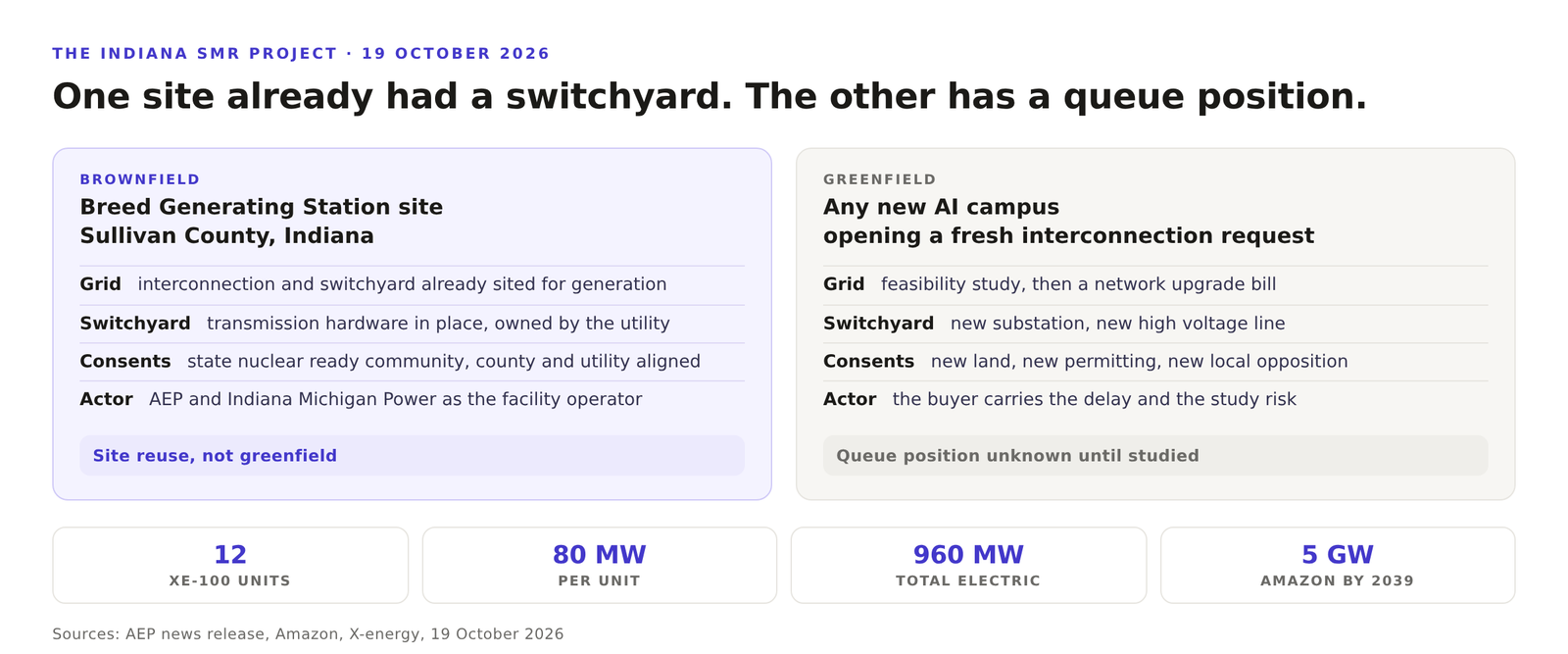
The reactors are the part that gets quoted. The site is the part that makes the deal work. Amazon is funding a 960 megawatt nuclear project at the former Breed Generating Station in Sullivan County, Indiana, and that address already carries what a new AI campus spends years waiting for, a connection to the grid.
AEP and X-energy signed the joint development agreement on 19 October. Twelve small modular reactor units of 80 megawatts, configured in groups of four. Amazon funds development and intends to buy the power on a long term contract that covers the cost of building and running the plant. AEP and Indiana Michigan Power would operate it. X-energy supplies the reactor.
A retired coal site is the fastest grid connection left
Coal plants were wired for generation. That means a switchyard, transmission easements, and a utility that has survived the local argument once. When the plant retires, the hardware stays. A greenfield campus starts with a study, then a network upgrade bill, then an energization date somebody else controls.
Breed sits in Sullivan County, which joined Indiana advanced nuclear ready communities. That covers the paperwork half of siting. Xe-100 covers the rest. It is a high temperature gas cooled reactor using helium as coolant and TRISO fuel particles packed into pebbles, and X-energy pitches the combination as preventing a meltdown without active systems. A compact footprint and an air cooled condenser option mean a dry site does not have to buy a river.
None of that is new physics. What is new is the willingness to put it next to the load instead of a hundred miles from one, because the connection is already there.
The agreement is real, the investment decision is not
Nothing has been built. The agreement is to evaluate feasibility, and the project only proceeds if it reaches a final investment decision. AEP chief executive Bill Fehrman said the arrangements with Amazon and X-energy provide all necessary capital protections and financial safeguards. That sentence is a regulated utility telling its regulators it is not carrying construction risk. The funder and the offtaker are the same company, which is one way to solve that.
Then put the calendar next to the number. More than 5 gigawatts of new US nuclear by 2039, two projects named, thirteen years to go. At 80 megawatts a unit and four to a group, 960 megawatts arrives in stages at best.
Paying above cost is how a utility says yes
AEP framed the project around affordability for existing customers, and Amazon signed the White House Ratepayer Protection Pledge this year, promising to pay the full electricity cost of its data centers rather than passing it to other ratepayers. Amazon’s own account of its Indiana record says AEP plans to cut residential rates by $100 from 2027 and freeze them for three years, after an average 3.6 percent base rate reduction in June 2026. Treat the framing as the company’s, and the policy as real, because AEP makes the affordability claim in its own release.
That is the political economy of AI load in a paragraph. A hyperscaler paying above cost is cheaper for a utility and its voters than one demanding a discount, and the difference decides whether the next retired coal site, substation or reactor gets built. AEP plans $78 billion of capital spending from 2026 through 2030. Some of it will land near a data center.
For anyone buying AI capacity, the megawatt you need in 2028 will not come from a reactor. It will come from an interconnection that is already on a drawing, and finding those before the queue fills is the work.
Three questions for your own plan. Which of your target sites sits behind an existing interconnection rather than a queue request, and who owns the switchyard. If a provider has announced nuclear capacity, is there a final investment decision or only a development agreement. And when your utility asks for local support, are you paying above cost or asking for a rebate.
Related reading. Microsoft walked from 23,000 GPUs because the grid says the 2030s is the same constraint from the buyer side. Your 2029 AI capacity plan is about three times too big puts numbers on the gap, and an LNG exporter building 10 GW of compute shows the version where the plant owns its own fuel.
Get the next one before it is old news
Independent analysis of cloud-native infrastructure, Kubernetes and data center economics. No vendor spin.